
EV Charging Infrastructure Buildout

What Defines Operational Maturity
- The U.S. network has passed 250,000 public ports, but the mix still skews toward Level 2, making corridor-grade fast charging capacity-constrained.
- NEVI's technical bar (4 ports, 150 kW simultaneous, 97% uptime) effectively defines minimum viable highway charging across the United States.
- J3400 (NACS) standardization is accelerating, yet CCS will remain operationally essential through the installed base for years.
- Reporting and accountability are rising via tools such as EV-ChART, making performance measurable across jurisdictions.
- The next competitive advantage is operational excellence—maintenance, parts, software discipline—not just new construction.
Structural Tensions Beneath Topline Counts
A quick snapshot exposes the structural tension underneath the topline counts. Federal corridor funding under the National Electric Vehicle Infrastructure (NEVI) Formula Program was set at nearly $5 billion over five years (FY2022–2026), yet the public narrative has often outrun what can be constructed, interconnected, commissioned, and maintained at scale.
The Joint Office's NEVI annual reporting for 2023–2024 underscored that the program's cycle is procedural by design—awards, construction, energization, opening—and that early operational openings were still measured in dozens of ports rather than thousands, with 61 NEVI-funded charging ports open across 15 station locations in eight states.
In other words: the federal program is not a single switch; it is a disciplined pipeline. Executives should internalize that reliability is the new range anxiety. Hardware power ratings, branding, and connector choices matter, but field performance is what turns infrastructure into a transport utility rather than a novelty.
That is why public standards have tightened. For federally funded corridor fast charging under 23 CFR Part 680, minimum technical expectations include at least four DC fast-charging ports per site capable of charging four vehicles simultaneously, continuous power delivery up to at least 150 kW per port.
An operational requirement sustains annual average uptime above 97% at the port level. Those figures are not aspirational; they are compliance targets that reshape operator economics, service contracts, spares strategy, and remote monitoring requirements.
The connector transition has been the most visible market signal, interpreted as an industrial coordination move rather than a mere plug swap. Tesla's connector—standardized under SAE J3400 (issued in late 2023 and revised as recommended practice in 2024)—has accelerated convergence in North America.
Automakers have staged their migrations through adapter access, then native inlets on new model years. For operators, the implication is immediate: ev charging infrastructure planning must treat multi-standard service as a multi-year reality. Even where policy frameworks were originally written around CCS Type 1, site designers increasingly assume dual-cable or dual-dispenser configurations.
That transition has a policy and reporting corollary. Data transparency is no longer optional in public funding and, increasingly, in state regulation. The Joint Office launched the Electric Vehicle Charging Analytics and Reporting Tool (EV-ChART) in February 2024 to standardize and collect operational data required under federal rules.
The Sequencing Problem
The buildout challenge is a sequencing problem with distinct gates that cannot be compressed indefinitely
Five Stages Every High-Power Site Must Navigate
A typical high-power site program follows five stages that cannot be compressed indefinitely: (1) corridor and demand selection using traffic patterns, dwell-time anchors, and existing competitive gaps; (2) host negotiation and permitting, including ADA access, civil work scope, and signage; (3) utility interconnection—often the longest lead-time item—covering transformer sizing, switchgear, service upgrades, and any required line extensions; (4) equipment procurement and commissioning, including network onboarding, payment flows, and interoperability testing; and (5) an operations regime built around preventive maintenance, remote resets, parts logistics, and on-site response SLAs consistent with a 97%+ uptime expectation. Organizations that treat stage (5) as an afterthought discover that the true cost of public charging is not the cabinet—it is sustained field performance. From an engineering standpoint, power is the visible tip of the iceberg. A NEVI-aligned corridor site built around 4×150 kW simultaneous delivery implies a minimum 600 kW of delivered power before losses and ancillary loads, forcing early decisions about load management, transformer capacity, and whether future expansion is physically and electrically feasible.
Common Failure Modes and Solutions
- Payment authorization breaks; cellular modems lose signal
- Credit card readers fail in heat or cold
- Cables and connector pins wear under heavy use
- Screens become unreadable in direct sun
- Software updates cascade into unexpected compatibility issues
- Robust connectivity with fallback paths mitigates network issues
- Sealed and serviceable components reduce weather-related failures
- Root-cause investigation treats every outage ticket seriously
Global Benchmarks and Regulatory Trends
Governments are no longer funding access alone—they are regulating performance and reliability
International Regulatory Context
The U.S. picture becomes sharper when compared to other major markets, clarifying which constraints are local and which are universal. The European Union's Alternative Fuels Infrastructure Regulation (AFIR), in force since April 13, 2024, sets binding corridor targets on the TEN-T core network.
Requirements by December 31, 2025 include a recharging pool of at least 400 kW at least every 60 km in each direction, with higher power requirements by 2027. The United Kingdom's Public Charge Point Regulations 2023 introduced a 99% reliability requirement for rapid public charge points (50 kW and above) as enforcement ramps after late 2024.
China, by contrast, has scaled at a different order of magnitude; official energy authorities reported charging infrastructure counts surpassing 20 million units by the end of 2025. These policies differ, but the common theme is unmistakable: governments are no longer funding access alone; they are regulating performance.
In the United States, the most consequential operational metric is shifting from simple uptime to successful charge probability. A port can report as available yet still fail due to handshake errors, thermal derates, payment faults, or vehicle-to-charger communication mismatches.
That is why experienced operators now treat reliability as layered: electrical availability, network connectivity, authentication success, stable power delivery, and a clean session termination. The operators that win long term will be those that instrument all layers and build automated recovery—session retries, remote resets, proactive parts replacement—into their daily workflow.
For utilities and regulators, the buildout creates a planning paradox: the system needs overbuild in the near term to reduce queues and failure frustration, but load growth becomes material only when drivers trust the network enough to rely on it. That makes demand forecasting unusually sensitive to user experience.
It also explains why some of the most promising near-term innovations are unglamorous: standardized commissioning checklists, shared diagnostic codes between vehicle OEMs and charger OEMs, and network-agnostic roaming that reduces the app maze.
The ChargeX Consortium's work on mechanisms like seamless retry is emblematic of where the market is headed—reducing the gap between installed and usable.
Operational Excellence Checklist
Site sponsors and charging providers that want infrastructure to behave like a utility typically insist on eight design-and-operations commitments: (1) redundant communications paths and verified signal strength at the dispenser; (2) a parts strategy with defined stock levels for high-failure components (cables, contactors, readers, screens); (3) preventive maintenance schedules tied to environmental stress and utilization; (4) clear on-site wayfinding and stall numbering that supports remote assistance; (5) documented cold-weather and hot-weather performance verification; (6) commissioning that includes real vehicle testing across major brands and connector types; (7) incident response SLAs with escalation paths to OEM engineering, not only call centers; and (8) data pipelines that can support EV-ChART or equivalent state reporting without manual rework.
Strategic Posture for July 2026
The next wave will be defined by whether multi-stall, high-uptime sites become the dominant unit of deployment
Execution Bias Over Optimism
The phrase charging stations in us has become shorthand for national readiness, but readiness is uneven. The next two years will likely be defined less by the total number of plugs and more by whether multi-stall, high-uptime sites become the dominant unit of deployment. If NEVI's standards are enforced consistently and if the J3400 transition is implemented without leaving the CCS installed base behind, the industry will have a clearer, simpler public interface—one that looks more like refueling and less like troubleshooting. The most credible strategic posture in July 2026 is neither optimism nor cynicism; it is execution bias. Charging infrastructure electric vehicles will only feel complete when reliability is treated as a core product, not a maintenance line item. The organizations that build the next wave of electric cars charging infrastructure—states, utilities, OEMs, site hosts, and operators—will be those that accept a simple truth: construction creates assets, but operations creates trust.
Moving from Installed to Usable
That matters because the market has shifted toward multi-stall plazas rather than single token fast chargers. Larger sites reduce the probability that a single fault strands a driver, and they amortize civil and interconnection costs across more charging sessions. The infrastructure trendline is moving toward campuses: canopies, lighting, pull-through bays for trailers, and room for medium- and heavy-duty electrification pilots.
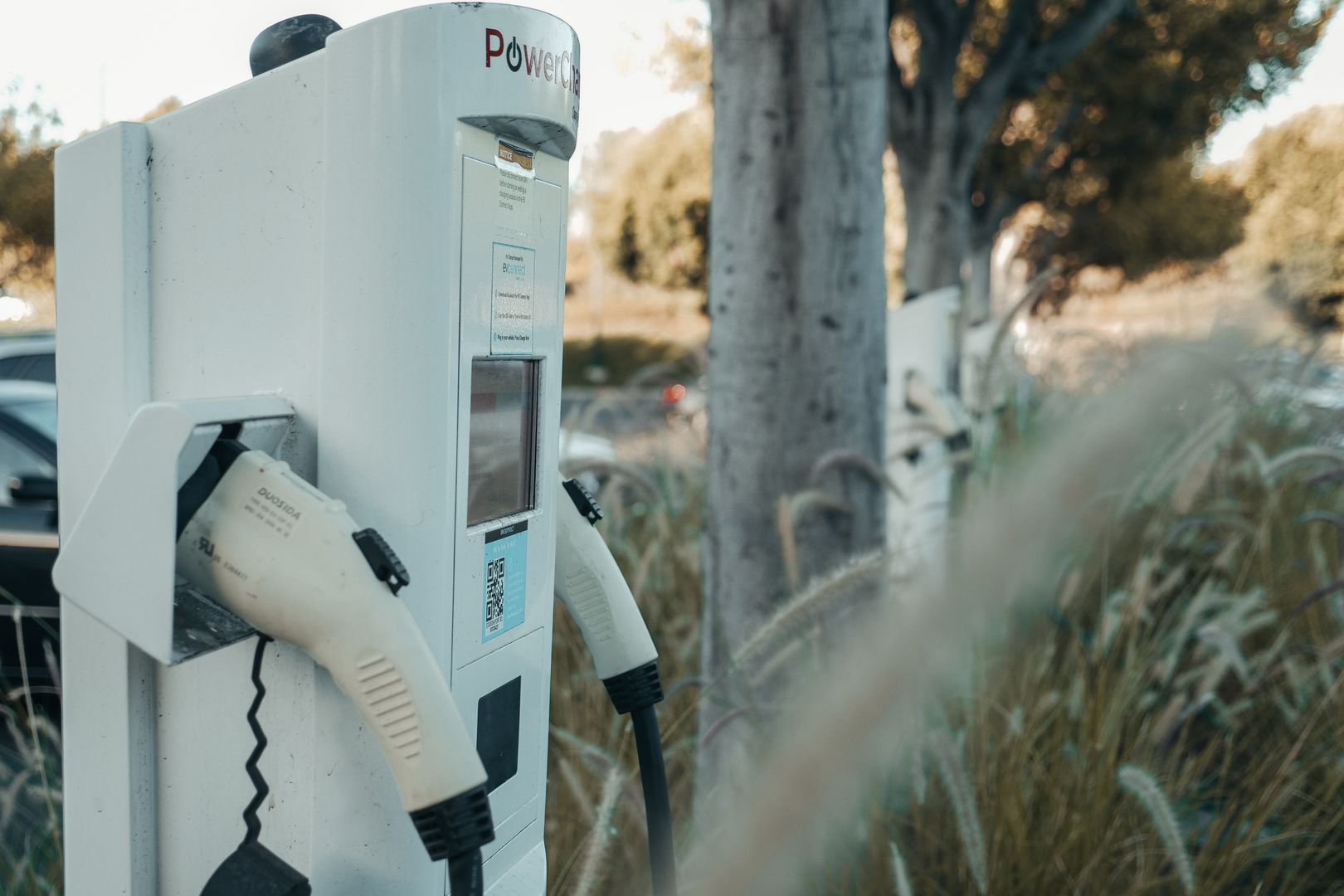
However, the barriers are often non-electrical. The most common failure modes observed across charging infrastructure for electric vehicles are mundane and solvable—if they are designed out early. Payment authorization breaks; cellular modems lose signal; credit card readers fail in heat or cold; cables and connector pins wear under heavy use; screens become unreadable in direct sun; and software updates cascade into unexpected compatibility issues.
The fix is rarely a single hero upgrade. It is a systems mindset: robust connectivity (with fallback paths), sealed and serviceable components, standardized configuration management, and an operator culture that treats every outage ticket as a root-cause investigation, not a one-off inconvenience.
Five points stand out for decision-makers trying to translate the current moment into a program plan: The U.S. network has passed 250,000 public ports, but the mix still skews toward Level 2, so corridor-grade fast charging remains capacity-constrained in many regions.
NEVI's technical bar (4 ports, 150 kW simultaneous, 97% uptime) effectively defines minimum viable highway charging in the U.S. J3400 (NACS) standardization is accelerating, but CCS will remain operationally essential through the installed base for years.
Reporting and accountability are rising via tools such as EV-ChART, making performance measurable across jurisdictions. The next competitive advantage is operational excellence—maintenance, parts, and software discipline—not just new construction.
It is also important to be candid about trade-offs, because overselling infrastructure maturity invites backlash. The advantages of the current buildout path are clear: standardized corridor targets reduce the chance of charging deserts, larger sites improve redundancy, and open standards reduce friction for multi-brand drivers.
But the disadvantages are equally concrete: interconnection queues can delay sites even when permits are secured; high-power equipment is complex and sensitive to harsh environments; and any network that grows faster than its field-service capacity will accumulate reliability debt.
Fatal error: Uncaught ValueError: Unknown format specifier "," in /srv/sites/autoglobal-insights/wp-content/themes/trafium-ai/parts/author_box_extended.php:89 Stack trace: #0 /srv/sites/autoglobal-insights/wp-content/themes/trafium-ai/parts/author_box_extended.php(89): sprintf('flex: 0 0 auto;...', 96) #1 /srv/sites/autoglobal-insights/wp-content/themes/trafium-ai/functions.php(434): include('/srv/sites/auto...') #2 /srv/sites/autoglobal-insights/wp-content/themes/trafium-ai/templates/blog-post.php(50): trafium_ai_render_post_block('author_box_exte...', 64, 16) #3 /srv/sites/autoglobal-insights/wp-includes/template-loader.php(106): include('/srv/sites/auto...') #4 /srv/sites/autoglobal-insights/wp-blog-header.php(19): require_once('/srv/sites/auto...') #5 /srv/sites/autoglobal-insights/index.php(17): require('/srv/sites/auto...') #6 {main} thrown in /srv/sites/autoglobal-insights/wp-content/themes/trafium-ai/parts/author_box_extended.php on line 89